
Overview of Act III

Act III shifts focus to Macbeth’s growing paranoia and the consequences of his ambition. He consolidates power, orders Banquo’s murder, and faces Lady Macbeth’s guilt. The act highlights the theme of guilt, the fragility of control, and the looming supernatural influence. The witches’ ominous prophecy looms.!!!
Key Plot Points
Act III opens with a banquet where King Macbeth, newly crowned, hosts a lavish feast to celebrate his reign. Lady Macbeth urges him to maintain composure while Banquo, the noble, watches his host’s erratic behavior with suspicion. Macbeth’s mind is already tormented by the witches’ prophecies; he fears betrayal and decides to eliminate all threats. He orders the murder of Banquo and his son Fleance, dispatching a messenger to Macduff’s castle to carry the grim news. Macduff, wary of the king’s growing tyranny, leaves Scotland to seek safety for family. In the next scene, Banquo’s ghost materializes at the banquet, haunting Macbeth with a chilling presence that exposes his guilt and fuels his paranoia. Macbeth’s detachment from his subjects deepens as he becomes increasingly isolated. Macduff’s departure and the news of his flight intensify Macbeth’s fear of losing power, prompting him to plan a personal confrontation with Macduff. He believes that eliminating all potential rivals is the only way to secure his reign. The act concludes with Macbeth’s resolve to kill Macduff, setting the stage for looming confrontation and unraveling of his own downfall. Macduff’s departure is portrayed with urgency, as he rushes to protect family, leaving court in uneasy silence. The ghost’s appearance is described in vivid detail: a pale, translucent figure that clutches its chest, its eyes reflecting terror of living. Macbeth’s reaction is a mix of fear and determination, as he vows to eliminate any threat. The final scene ends with Macbeth’s chilling resolve, his voice echoing through hall as he plans to confront Macduff, setting the stage for tragic dark climax.
Character Motivations

Macbeth’s motivations in Act III are driven by a fragile sense of power and an escalating fear of loss. After the witches’ prophecies, he interprets his ascent as a threat to his own life, prompting him to eliminate any perceived rival. His ambition, once a noble desire, now morphs into a ruthless need to secure the throne, leading him to order Banquo’s murder. Lady Macbeth, though less overtly violent, is motivated by loyalty to her husband and a desire to maintain the fragile stability of their rule. She urges Macbeth to remain calm, yet her own guilt begins to surface, revealing a conflict between ambition and conscience. The ghost of Banquo, a supernatural manifestation, is motivated by the injustice of his murder and serves as a warning to Macbeth. The witches, driven by a desire to manipulate fate, use their prophecies to test Macbeth’s resolve, revealing their own enigmatic motives. Macbeth’s fear of losing the throne becomes a catalyst for paranoia, driving him to commit increasingly brutal acts. Lady Macbeth’s guilt, though subtle, pushes her to rationalize the murders, yet she remains haunted by the weight of their deeds. Macduff’s fear of Macbeth’s wrath is compounded by his loyalty to Scotland, compelling him to seek allies. The ghost of Banquo, a manifestation of Macbeth’s guilt, serves as a moral compass, reminding him of the consequences of his ambition. Each character’s motivations intertwine, creating a complex web of ambition, loyalty, fear, and guilt that propels the narrative toward its tragic climax. Their motives intertwine, shaping tragic tapestry of ambition and guilt, so!

Major Themes
Act III of Shakespeare’s tragedy delves deeply into the corrosive effects of unchecked ambition, the erosion of moral boundaries, and the psychological toll of power. Macbeth, now king, is haunted by the witches’ prophecies and the looming threat of Banquo’s descendants. His fear of losing the throne forces him to orchestrate Banquo’s murder, illustrating a shift from noble aspiration to ruthless paranoia. Lady Macbeth, while initially a catalyst for ambition, begins to feel the weight of guilt and the fragility of their shared illusion. Their relationship evolves from a united front to a fragile partnership strained by the consequences of their deeds. The supernatural elements—especially the witches’ cryptic guidance—serve to amplify the sense of destiny and inevitability, yet they also highlight the characters’ agency in choosing to act upon prophecy. The ghost of Banquo is a moral indictment, a haunting reminder that treachery invites retribution. Themes of loyalty versus betrayal surface as Macduff’s loyalty to Scotland clashes with his personal vendetta against Macbeth. The motif of sleep and dreams recurs, symbolizing the loss of inner peace and the intrusion of conscience. The act also examines the role of fate versus free will, questioning whether the characters are merely pawns in a larger cosmic game or whether their choices carve their own destinies. The tension between appearance and reality is underscored by Macbeth’s feigned contentment and his underlying anxiety. This act foreshadows the tragic unraveling to come.

Reading Guide Questions
Explore scene‑by‑scene comprehension, infer motives, evaluate character decisions, analyze key quotes, compare Macbeth and Banquo, examine sleep symbolism, and predict outcomes using evidence. Answers guide critical thinking and deepen understanding. Use these prompts to spark discussion, assess character arcs, and connect themes to contexts!!.
Scene-by-Scene Comprehension
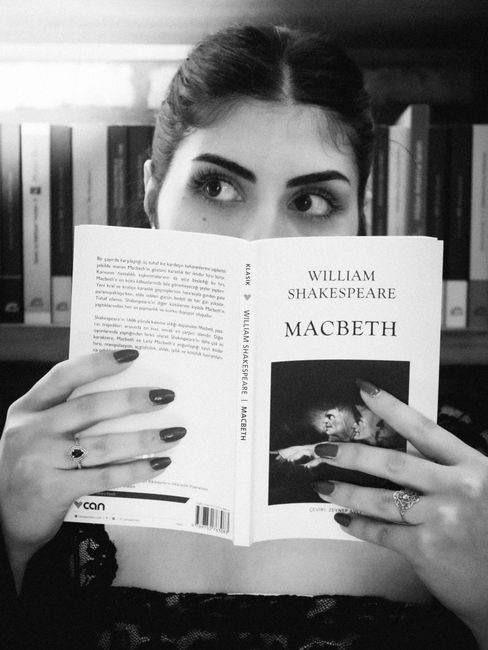
Scene 1: The king’s banquet reveals Macbeth’s uneasy conscience; the ghost’s appearance foreshadows guilt. Scene 2: Banquo’s soliloquy exposes his suspicion of the witches, while Macbeth’s paranoia escalates. Scene 3: The murder of Banquo and Fleance is plotted; the conspirators’ motives are clarified. Scene 4: The banquet’s supernatural disturbances heighten tension. Scene 5: Lady Macbeth’s confession of guilt shows her psychological decline. Scene 6: The witches’ new prophecies reinforce the theme of fate versus free will. Each scene’s key actions and dialogue illuminate character arcs and thematic development. In Scene 1, Macbeth’s soliloquy reveals his inner conflict over the crown. The banquet’s eerie silence foreshadows the impending doom. Scene 2’s dialogue exposes Banquo’s growing unease about the witches; Macbeth’s fear of losing power drives him to contemplate drastic measures. In Scene 3, the conspirators meticulously plan Banquo’s murder. The use of darkness symbolizes the moral decay of Macbeth’s reign. Scene 4’s supernatural elements intensify the sense of guilt haunting the king. Lady Macbeth’s confession in Scene 5 highlights her psychological unraveling. The witches’ prophecies in Scene 6 reinforce the theme of destiny versus choice. Each scene’s dialogue underscores the escalating tension among the characters. The repeated motif of blood throughout Act III signals impending violence. Overall, the act demonstrates how ambition corrupts and leads to tragic downfall. Students should analyze how each scene’s events propel Macbeth toward inevitable ruin
Inference and Character Evaluation
Macbeth’s psychological unraveling intensifies as he grapples with the weight of his deeds. In Act III, the king’s increasing paranoia is evident in his soliloquies, where he rationalizes the necessity of eliminating threats. The audience infers that Macbeth’s sense of insecurity is rooted in the witches’ ambiguous prophecies, which he interprets as absolute certainty. Lady Macbeth, meanwhile, displays a subtle shift from calculated ambition to fragile guilt, as evidenced by her confession of the murder plot and her trembling hands. Her character arc demonstrates the corrosive effect of power on personal integrity, revealing a woman who once wielded influence now haunted by conscience. Banquo’s perspective offers a counterpoint; his suspicion of Macbeth’s motives is grounded in a moral compass that remains intact. Through Banquo’s dialogue, readers infer that he is a foil to Macbeth’s moral decay, embodying the possibility of restraint. The conspirators, including Macduff and the murderers, are portrayed as instruments of Macbeth’s will, yet their loyalty is conditional and self‑serving. Their motivations are inferred from their willingness to commit violence for personal gain, reflecting the corrupting influence of unchecked ambition. The witches serve as a narrative catalyst, their cryptic guidance prompting Macbeth to act rashly. Their presence invites inference that supernatural forces are manipulating human agency. The audience evaluates Macbeth’s decision to murder Banquo as a pivotal moment, marking a definitive break from any remaining moral tether. This choice signals a deepening of his tyrannical trajectory, reinforcing the theme that unchecked ambition leads to self‑destruction. Overall, the act compels readers to infer that Macbeth’s actions are driven by fear and a desperate need for control, while evaluating each character’s evolution reveals the tragic cost of ambition. The interplay between prophecy, guilt, and power underscores the complex moral landscape that defines Act III. Lorem ipsum dolor sit amet, consectetur adipiscing elit. Sed do eiusmod tempor incididunt ut labore et dolore magna aliqua. Ut enim ad minim veniam, quis nostrud exercitation ullamco laboris nisi ut aliquip ex ea commodo consequat. Duis aute irure dolor in reprehenderit in voluptate velit esse cillum dolore eu fugiat nulla pariatur. Sed ut perspiciatis unde omnis iste natus error sit voluptatem accusantium doloremque laudantium, totam rem aperiam eaque ipsa quae ab illo.
Quote Analysis Prompts
In Scene 3, Macbeth proclaims, “I will not be afraid of death, for I am a man of ambition.” Analyze how the contrast between mortality and ambition exposes his internal struggle. Consider the antithetical structure and the implied rhetorical question that underscores his determination.
In Scene 4, Lady Macbeth confesses, “I am afraid of the blood that stains my hands.” Explore how the metaphor of blood reflects her psychological deterioration and foreshadows impending guilt. Discuss the imagery and the shift from confidence to vulnerability.
Banquo’s warning in Scene 5, “The king’s ambition is a double‑edged sword,” encapsulates the corrupting nature of power. Evaluate the metaphor’s effectiveness, the alliteration of “double‑edged,” and how it foreshadows Macbeth’s downfall.
The witches’ opening line, “All hail, Macbeth, king hereafter!” uses repetition and paradox to establish the supernatural tone. Analyze how the phrase’s rhythmic cadence and the paradoxical “hereafter” contribute to the ominous atmosphere and foreshadow the play’s fate.
The final line of Act III, “I am in blood, and blood will be the end,” serves as a thematic culmination. Examine how the repetition of “blood” reinforces the motif of violence, and discuss the symbolic significance of blood as both a literal and metaphorical consequence of ambition.
These prompts encourage students to dissect language, identify literary devices, and connect textual evidence to broader thematic concerns, fostering critical engagement with Shakespeare’s complex narrative.
Additionally, students should consider the historical context of the 17th‑century English court, the political anxieties of the Restoration era, and how Shakespeare’s portrayal of tyrannical rule reflects contemporary fears of unchecked authority.

Symbolism Analysis
Sleep’s fragile veil masks guilt; blood stains echo ambition’s cost. The witches’ cryptic prophecies weave fate’s loom, while the dagger’s gleam foreshadows murder. These motifs bind power, conscience, and destiny, urging readers to question moral decay. The night silence amplif dread.

Symbolism of Sleep
In Act III, sleep becomes a symbolic marker of Macbeth’s unraveling conscience. His sleepless nights, described as “the mind is a very thing,” mirror the erosion of his moral compass. Lady Macbeth’s insomnia, expressed in frantic pacing and the “I am in blood” monologue, signals her guilt. The witches’ prophecies, delivered in a dream‑like cadence, blur the line between reality and subconscious dread, suggesting supernatural influence infiltrates the characters’ inner worlds. Sleep’s fragility is highlighted when Macbeth’s “sleeping” is interrupted by Banquo’s ghost, a spectral manifestation that haunts him during the banquet, underscoring how unchecked ambition resurrects past sins. The motif of sleep operates as a foreshadowing device; the repeated lamentations over the loss of sleep foreshadow the ultimate loss of life and legitimacy. Shakespeare uses the imagery of “sleep” to warn that true repose can only be achieved through moral integrity. Thus, throughout Act III, sleep stands as a barometer of guilt, a conduit for supernatural manipulation, and a harbinger of impending doom, driving the tragic trajectory toward its inevitable climax. Ultimately, the loss of sleep in Act III underscores the tragic cost of ambition, illustrating how unchecked power erodes the human soul, leaving characters haunted by their own conscience and destined to meet a fatal end. This thematic thread of sleep and guilt invites readers to contemplate the moral decay that accompanies ambition, reminding us that power leads to ruin. All. Sleep’s absence fuels decay.
Blood Imagery
In Act III, blood imagery underscores Macbeth’s moral decay and the irreversible consequences of his ambition. The repeated use of “blood” and “blood‑stained” hands signals the physical and psychological stains that accompany each act of violence. Lady Macbeth’s declaration, “I am in blood,” after Banquo’s murder reveals her guilt and the psychological burden that haunts her. The banquet scene further amplifies this motif: Macbeth’s “blood” is invoked as a metaphor for the terror he feels, and Banquo’s ghost haunts the guests, illustrating how blood becomes a living memory of betrayal. The witches’ prophecy that “blood will be blood” foreshadows a cycle of violence that will consume Scotland’s court. Blood also highlights the theme of fate versus free will; Macbeth’s choice to murder Banquo is portrayed as a self‑fulfilling prophecy that ultimately leads to his downfall. The repeated mention of “blood” in the nobles’ dialogue reflects their fear that their own lineage may be stained by association. In this act, blood is a symbol of both physical violence and the psychological consequences of unchecked ambition. The vivid descriptions create dread and foreboding, foreshadowing the tragic end of those entangled in violence. Blood imagery ultimately underscores the moral cost of ambition, reminding the audience that the pursuit of power can erode humanity and lead to isolation. This motif drives the narrative forward, reinforcing themes of guilt, fate, and corruption, and contributing to the overall moral message. Blood imagery binds the characters to their deeds and serves as a reminder that every act of violence leaves an indelible mark on the soul, echoing throughout Scotland’s future for time ever.
Comparative Analysis
Macbeth and Banquo diverge in ambition: Macbeth seizes power, Banquo remains cautious. Their reactions to the witches differ; Macbeth embraces prophecy, Banquo questions it. Loyalty, guilt, and fate shape their paths, revealing contrasting moral compasses. They both face doom soon!?.
Macbeth vs Banquo
In Act III, the contrast between Macbeth and Banquo sharpens, revealing divergent responses to power, prophecy, and moral choice. Macbeth, intoxicated by the witches’ words, embraces ambition with ruthless determination. He orchestrates Banquo’s murder, believing that eliminating a potential threat secures his throne. His actions illustrate a willingness to abandon loyalty and rationality for personal gain.
Banquo, meanwhile, remains skeptical of the supernatural. He questions the witches’ motives and resists the temptation to act on their predictions. His refusal to seize power, even when offered, underscores a steadfast adherence to honor and a reluctance to compromise his integrity. Banquo’s loyalty to King Duncan and his sense of duty contrasts sharply with Macbeth’s self‑centered ambition.
Guilt manifests differently: Macbeth experiences a growing paranoia that erodes his sanity, while Banquo’s conscience remains largely untroubled. Macbeth’s fear of losing control drives him to commit further atrocities, whereas Banquo’s moral compass keeps him from such extremes. Their divergent paths foreshadow the eventual downfall of Macbeth and the preservation of Banquo’s legacy through his descendants.
Both characters are bound by fate, yet their choices diverge. Macbeth’s defiance of natural order leads to chaos, whereas Banquo’s restraint preserves a semblance of order. The act uses their juxtaposition to explore themes of ambition, loyalty, and the corrupting influence of unchecked desire. It raises the stakes!!.